
Skyblog
Fort Pulaski: An Easy Day Trip From Savannah, Georgia
Updated 2026-11-11
Savannah is famous for its shaded squares, its riverfront and a food scene that rewards slow afternoons. But if you have a free morning, one of the most memorable things to do sits just east of the city, on the road out to Tybee Island: Fort Pulaski National Monument. It is a place where a single day in 1862 changed how the world built its defenses, and today it is one of the calmest, most photogenic stops on the Georgia coast.
You do not need to be a history buff to enjoy it. The fort is surrounded by a moat and salt marsh, the light on the brick is beautiful late in the day, and the views across the river make it an easy add-on to a long weekend in Savannah.
Why this fort matters
For much of the nineteenth century, thick masonry forts were the country's main protection against attack from the sea. Fort Pulaski was built to be exactly that kind of fortress. During the Civil War, however, the U.S. Army brought a new technology to bear on it: rifled cannons, which could fire farther and hit harder than anything the builders had imagined.
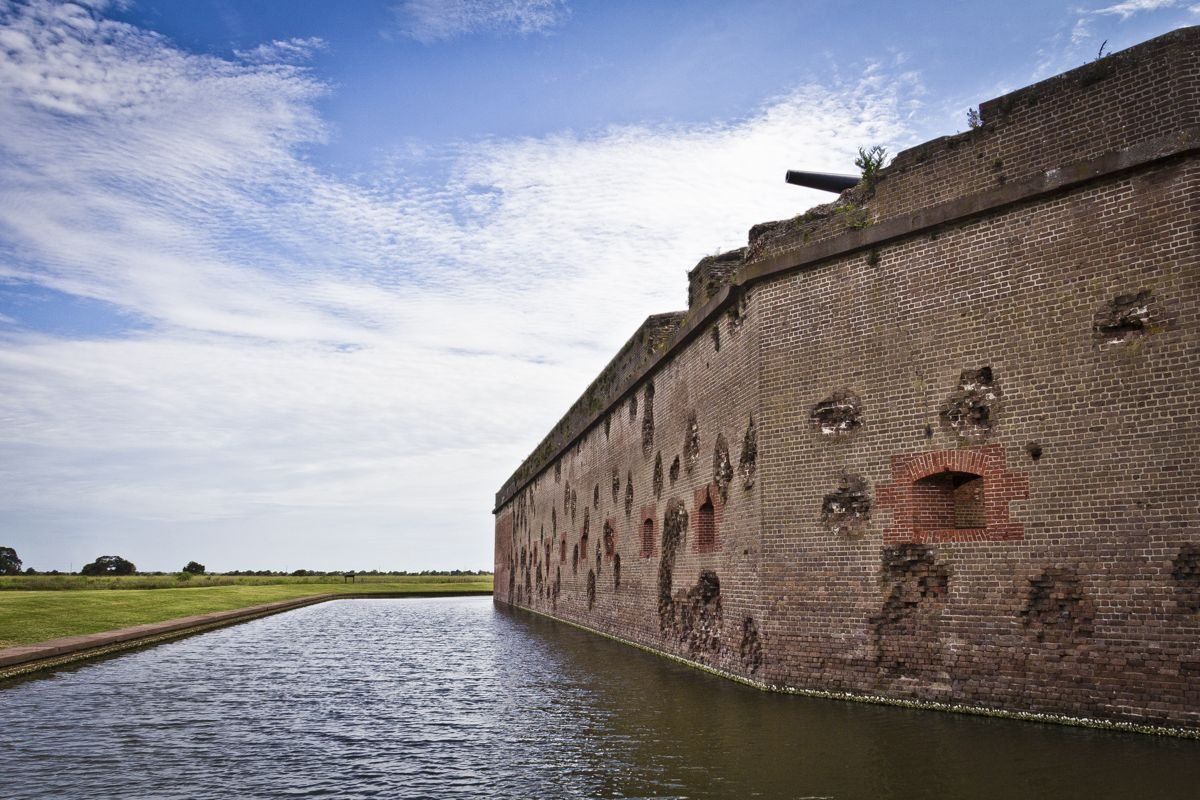
The bombardment forced the Confederate garrison inside to surrender. The National Park Service describes the siege as a landmark experiment in the history of military science, and you can still see the evidence on the walls. Some sections remain scarred by the shelling, and in at least one spot an artillery shell is still lodged in the brick. Standing in front of those walls is a vivid reminder of how quickly technology can make the impossible ordinary.
What to see and do
Start at the visitor center, where a short park film and the museum exhibits set the scene in a few minutes. From there, walk across to the fort itself and explore the casemates, the long arched rooms along the walls where cannons once stood. In the late afternoon, the arches frame the sunlight in a way that makes them a favorite with photographers.
Rangers and volunteers offer guided tours and living history programs, and on many days there are historic weapons demonstrations, including cannon firings by volunteers in period uniforms. If you are traveling with children, ask about the Junior Ranger program, which turns the visit into a small mission with a badge at the end.
Outside the walls, the park is a pleasant place to slow down. There are walking and biking trails through the marsh, and birdwatchers will want to bring binoculars: great blue herons are regular visitors, sometimes standing watch on top of the fort's brick walls. Look out over the Savannah River for the small white Cockspur Island Lighthouse, one of the quietest landmarks on the coast. Paddlers can explore the surrounding waters by kayak or canoe.
Plan your visit
Fort Pulaski is open year round, except on New Year's Day, Thanksgiving and Christmas. The park and visitor center are open from 9 a.m. to 5 p.m., the historic fort itself closes at 4:30 p.m., and last entry is at 4:30 p.m., so arriving by early afternoon gives you time to see everything without rushing. A per-person entrance fee applies; check the official park page for current details before you go.
The drive from downtown Savannah follows US-80 East toward Tybee Island, which makes it easy to combine the fort with an afternoon at the beach. Savannah enjoys a humid subtropical climate with more than two hundred days of sunshine a year. Spring and autumn are especially pleasant, with temperatures from the upper fifties into the eighties Fahrenheit, while summer afternoons can bring heat and thunderstorms. Winter is usually dry and quiet, a good time for travelers who prefer fewer crowds.
Savannah/Hilton Head International Airport is the closest gateway, and the city's compact historic district means you can spend the rest of your trip on foot, moving from square to square, café to café, until it is time to head back out toward the coast.
Sources
- Fort Pulaski National Monument · National Park Service
- Operating Hours and Seasons, Fort Pulaski · National Park Service
- Things To Do, Fort Pulaski · National Park Service