Skyblog · U.S. getaways
New Orleans Beyond Bourbon Street: Jean Lafitte Park, Chalmette Battlefield and the Bayou
A free national park in three pieces around New Orleans: the French Quarter visitor center, the Chalmette battlefield and what is open at Barataria Preserve.
Published November 25, 2026
Most first trips to New Orleans revolve around the French Quarter, live music and long meals. Fewer visitors realize that a national park is woven into the city and the wetlands around it. Jean Lafitte National Historical Park and Preserve tells the story of south Louisiana through six separate sites, and three of them sit within easy reach of a New Orleans hotel.
Those three are the French Quarter Visitor Center on Decatur Street, the Chalmette Battlefield and National Cemetery downriver from the city, and the Barataria Preserve across the Mississippi on the West Bank. The other three, the Acadian cultural centers in Lafayette, Eunice and Thibodaux, are better suited to a road trip into Cajun country. Entry to every site is free, and park programs are free unless a listing says otherwise. One thing has changed this year, though: much of Barataria Preserve is closed for repairs, so the plan below reflects what is actually open in late 2026.
Start in the French Quarter
The French Quarter Visitor Center at 419 Decatur Street is the natural first stop, a short walk from Jackson Square and the riverfront. Its exhibits cover the people, nature, history and food of south Louisiana, and the many cultures that met at this bend of the river. It is a compact museum that gives useful context before you wander the streets outside.
Rangers here can tell you what programs are running that week across the park, and it is the easiest place to ask about Chalmette and Barataria before you commit to a half day away from the Quarter. Until further notice, the building also hosts the operations of New Orleans Jazz National Historical Park, so it is a good place to ask about the city's music history too.
Plan on 45 minutes to an hour inside. Pair it with a walk along the river and a stop in Jackson Square, and you have an easy first morning that sets up the rest of the trip.
Chalmette Battlefield and National Cemetery
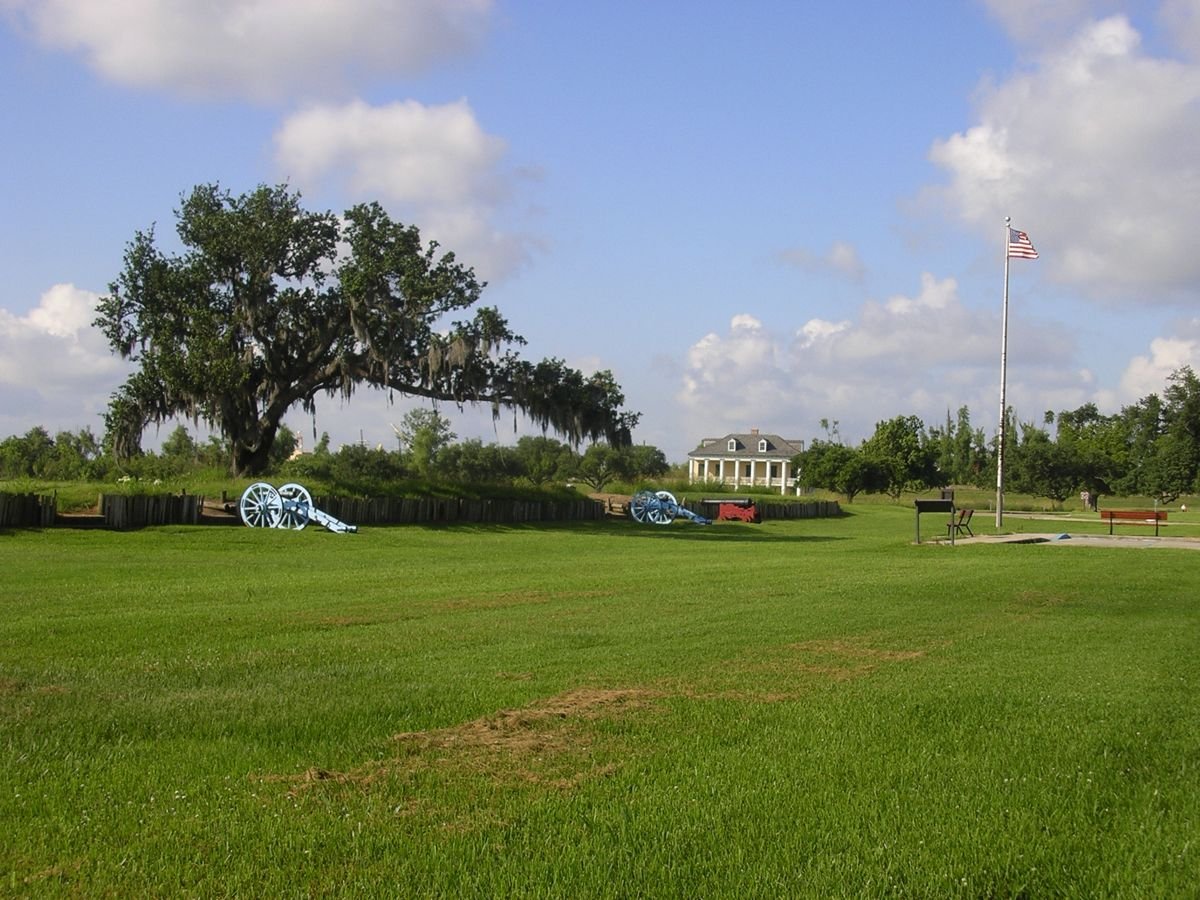
On January 8, 1815, American forces under General Andrew Jackson defeated a larger British army on the fields at Chalmette, just downriver from New Orleans. The Battle of New Orleans was the last great battle of the War of 1812, and for decades afterward Americans celebrated January 8 much like the Fourth of July. Today the site is quiet and open: a long green field, an earthwork line with cannons, a tall monument and a white house near the river.
The visitor center sits at 1 Battlefield Drive in Chalmette. Vehicle gates to the battlefield open from 9 a.m. to 4:30 p.m., while people on foot or on bikes can enter from sunrise to sunset. Walk the battle line, read the field exhibits and then continue to Chalmette National Cemetery, about half a mile away, where vehicle gates open from 9:30 a.m. to 4:30 p.m.
There is also a scenic way to arrive. A paddlewheeler cruise leaves from the French Quarter riverfront and stops at the battlefield, which turns the visit into a half day on the Mississippi. If you drive, give yourself two to three hours to see the battlefield and cemetery without rushing.
Barataria Preserve: what is open right now
Barataria Preserve protects 26,000 acres of swamp, marsh and bottomland forest on the West Bank, home to alligators and more than 200 species of birds. It is the best place near the city to see the wetlands that shaped south Louisiana. However, the preserve's visitor center and most of its trails closed on February 2, 2026, for about two years of repairs to damage from Hurricane Ida. Check the park's current conditions page before you go.
Some access remains. The Twin Canals parking lot, its trail and the canoe launch are open for day use, though there are no restrooms there. Visitor services have moved to the Louisiana Wetlands Education Center, a separate facility with its own admission. Rangers staff the nearby Wetland Trace area on Wednesdays and Thursdays from 10 a.m. to 2 p.m. and lead a guided walk at 1 p.m. The Wetland Trace boardwalk is at 4917 City Park Drive in the town of Jean Lafitte, about six miles from the preserve.
Wildlife rules matter here. Never feed or approach alligators, keep a safe distance from any you see, and keep children and pets close to you near the water. Bring insect repellent, water and sun protection even on mild days.
Getting there and getting around
Louis Armstrong New Orleans International Airport (MSY) is the closest airport to the park's New Orleans sites; Lafayette is the better choice if your trip centers on the Acadian cultural centers. In the city, buses and streetcars cover most neighborhoods, including the French Quarter, so you can skip a car for the first days.
Chalmette and Barataria are a different story. City buses do not run to either site, and rideshare pickups for the trip back can be hard to find. If you plan to visit them without a car, arrange your return ride before you set out, or take the paddlewheeler to Chalmette. For Barataria, a rental car for one day is the most reliable option.
A simple three-day plan works well: the French Quarter Visitor Center and a walk on day one, Chalmette on day two, and a morning at Twin Canals or the Wetland Trace on day three, before a late lunch back in the city.
When to go
Late fall through early spring brings the most comfortable weather for walking the battlefield and the bayou trails, with fewer mosquitoes than summer. If you are in town around January 8, check the park calendar for programs tied to the anniversary of the battle. Summer is hot and humid, and afternoon storms are common, so start early and plan indoor time at midday. The Atlantic hurricane season runs from June through November, so keep an eye on forecasts if you travel in those months.
Frequently asked questions
Does Jean Lafitte National Historical Park charge an entrance fee?
No. The park is free to enter, no pass is required, and its programs are free unless noted. The Louisiana Wetlands Education Center, where Barataria visitor services moved during repairs, is a separate facility with its own admission.
Is Barataria Preserve open?
Only partly. The visitor center and most trails closed on February 2, 2026, for about two years of repairs. The Twin Canals lot, trail and canoe launch remain open for day use, and rangers are at the Wetland Trace on Wednesdays and Thursdays from 10 a.m. to 2 p.m.
What are the hours at Chalmette Battlefield?
Vehicle gates open from 9 a.m. to 4:30 p.m. Visitors on foot or bike may enter from sunrise to sunset. The national cemetery's vehicle gates open from 9:30 a.m. to 4:30 p.m.
Can I reach Chalmette or Barataria by public transit?
No. New Orleans city buses do not serve either site, and rideshare return trips can be hard to find. Drive, confirm a ride back in advance or take the paddlewheeler from the French Quarter to Chalmette.
Which airport is closest?
Louis Armstrong New Orleans International Airport (MSY) is the closest to the French Quarter, Chalmette and Barataria sites. Lafayette is closer to the Acadian cultural centers.
Sources
- Chalmette Battlefield, Jean Lafitte National Historical Park and Preserve · National Park Service
- Barataria Preserve, Jean Lafitte National Historical Park and Preserve · National Park Service
- French Quarter Visitor Center, Jean Lafitte National Historical Park and Preserve · National Park Service
- Fees & Passes, Jean Lafitte National Historical Park and Preserve · National Park Service
- Directions & Transportation, Jean Lafitte National Historical Park and Preserve · National Park Service