Skyblog · Special places
Bryce Canyon: Viewpoints, the Shuttle and a Hoodoo Hike for a First Visit
Bryce Canyon's best views sit along the first 3 mi of the main road. Here is the viewpoint order, how the shuttle fits in and one classic hike.
Published November 20, 2026
Why Bryce Canyon is easy to plan
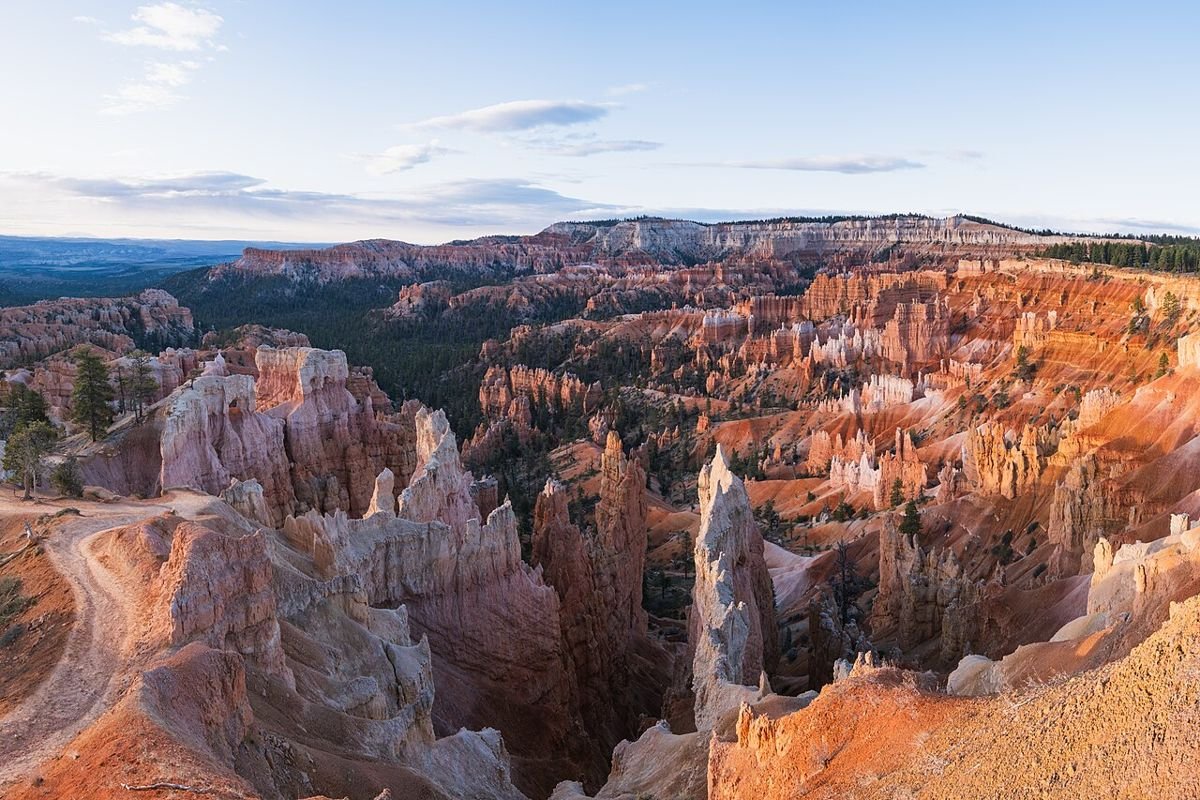
Bryce Canyon is famous for hoodoos, the tall, thin spires of rock that fill the Bryce Amphitheater, and the best place to see them is surprisingly compact. The National Park Service says this iconic area lies along the first 3 mi of the main park road, where four main viewpoints stand close together: Bryce Point, Inspiration Point, Sunset Point and Sunrise Point. The park calls the amphitheater home to the greatest concentration of hoodoos found anywhere on Earth.
That means a first visit does not need a long itinerary. A day, or even a few hours, is enough to see the amphitheater from its best overlooks, and a short hike takes you down among the hoodoos themselves.
The four main viewpoints
Whether you ride the shuttle or drive, NPS recommends beginning at Bryce Point, the southernmost and perhaps most famous view into the amphitheater. Then work north to Inspiration Point, Sunset Point and finally Sunrise Point, which the park describes as equally spectacular at daybreak and at day's end. All four viewpoints are paved, relatively flat and open year-round.
Sunset Point and Sunrise Point are connected by an easy walk. From Sunset Point to Sunrise Point it is a flat 0.5 mi one way on the Rim Trail, which the park calls its easiest walk at 1 mi out and back. It is a good choice if you want a view without a descent.
How the shuttle fits in
The park's free shuttle runs through the Bryce Amphitheater area from April through mid-October; in 2026 it operates from April 3 to October 18. It is not mandatory and needs no reservation, but the park highly recommends it because parking at the viewpoints is limited and lots can close temporarily when full. Buses typically reach each stop every 15 minutes, and your park entrance receipt or annual pass covers unlimited rides for everyone in your vehicle.
The best places to board are the Shuttle Station in Bryce Canyon City, before you enter the park (stop 1), or the Visitor Center (stop 6), and the best places to leave your car are the Shuttle Station or the additional parking lot across from the Visitor Center. All buses are wheelchair accessible and carry two bicycles, but pets are not allowed. The shuttle is ideal for one-way walks on the Rim Trail: get off at one viewpoint and walk to the next.
What to see and do
Bryce Point and Inspiration Point: broad overlooks that show the full sweep of the amphitheater.
Sunset Point: a classic late-day view and the start of the Navajo Loop.
Sunrise Point: the northernmost viewpoint in the amphitheater and the start of the Queen's Garden Trail.
Queen's Garden and Navajo Loop: the NPS's most recommended hike. The combination loop covers 2.9 mi in about 2 to 3 hours and is rated moderate. NPS suggests hiking it clockwise: down Queen's Garden from Sunrise Point and up the Navajo Loop to Sunset Point, since most injuries happen while walking down the steeper Navajo side. Queen's Garden is the least difficult trail that descends into the amphitheater.
Make a full day of it
Begin at Bryce Point in the morning, work north through the viewpoints, and save the hike for the cooler part of the day. If you have the energy, hike the Queen's Garden and Navajo Loop, then end at Sunrise Point or Sunset Point for the light. Remember that every descent into the amphitheater means a climb back up, so allow time and carry water.
The park estimates one to three hours to see the amphitheater viewpoints. In winter, take special care on the steep slope above Inspiration Point and check road and trail conditions before you go.
Plan your visit
Las Vegas (LAS) is a practical gateway: rent a car and drive to the park, and consider pairing it with Zion National Park on the same trip. Because the viewpoints are so close together, you can fit Bryce into a long day or an overnight stay. Wear sturdy shoes and bring water, sun protection and layers, since the park sits at high elevation, reaching 9,115 ft at Rainbow Point and Yovimpa Point, and temperatures can change quickly. For a car-free option, a paved shared-use path of 7 mi links the shuttle station with the Visitor Center and the four main viewpoints, and bikes can be rented at the Historic Service Station.
Check the NPS pages for the shuttle schedule, parking rules and current conditions on the day you plan to go. Arrive early at the viewpoints if you want parking without a wait.
A simple half-day schedule
If you have only half a day, keep it simple. Start at Bryce Point and Inspiration Point for the wide views, then drive or ride to Sunset Point and walk the flat Rim Trail to Sunrise Point. If you still have energy, descend a short way on the Queen's Garden Trail, the least difficult route into the amphitheater, and turn back before you tire.
Remember that every step down is a step up on the way back, so carry water and set a turnaround time. The viewpoints are close together, which makes it easy to adjust the plan as the light and weather change.
Frequently asked questions
What are the four main viewpoints at Bryce Canyon?
Bryce Point, Inspiration Point, Sunset Point and Sunrise Point, all along the first 3 mi of the main road. NPS recommends starting at Bryce Point, the southernmost, and working north.
Is there a shuttle?
Yes, from April through mid-October, serving the Bryce Amphitheater and free with park admission. It does not run in winter, so check the NPS shuttle page for the dates that apply to your trip.
What is the best easy walk?
The Rim Trail between Sunset Point and Sunrise Point: flat, 0.5 mi one way, and the park's easiest walk.
What is the best hike among the hoodoos?
The Queen's Garden and Navajo Loop combination. It covers 2.9 mi, takes about 2 to 3 hours, and NPS suggests hiking it clockwise from Sunrise Point.
Sources
- Park Shuttle · National Park Service
- Viewpoints · National Park Service
- See the Bryce Amphitheater · National Park Service
- Parking Information · National Park Service
- Queens Garden & Navajo Combination · National Park Service