Skyblog · Special places
Dry Tortugas From Key West: Ferry or Seaplane and How to Plan the Day
Dry Tortugas has no road: you reach Fort Jefferson from Key West by ferry or seaplane. Here is how each works and how to plan the day.
Published November 20, 2026
Why Dry Tortugas takes some planning
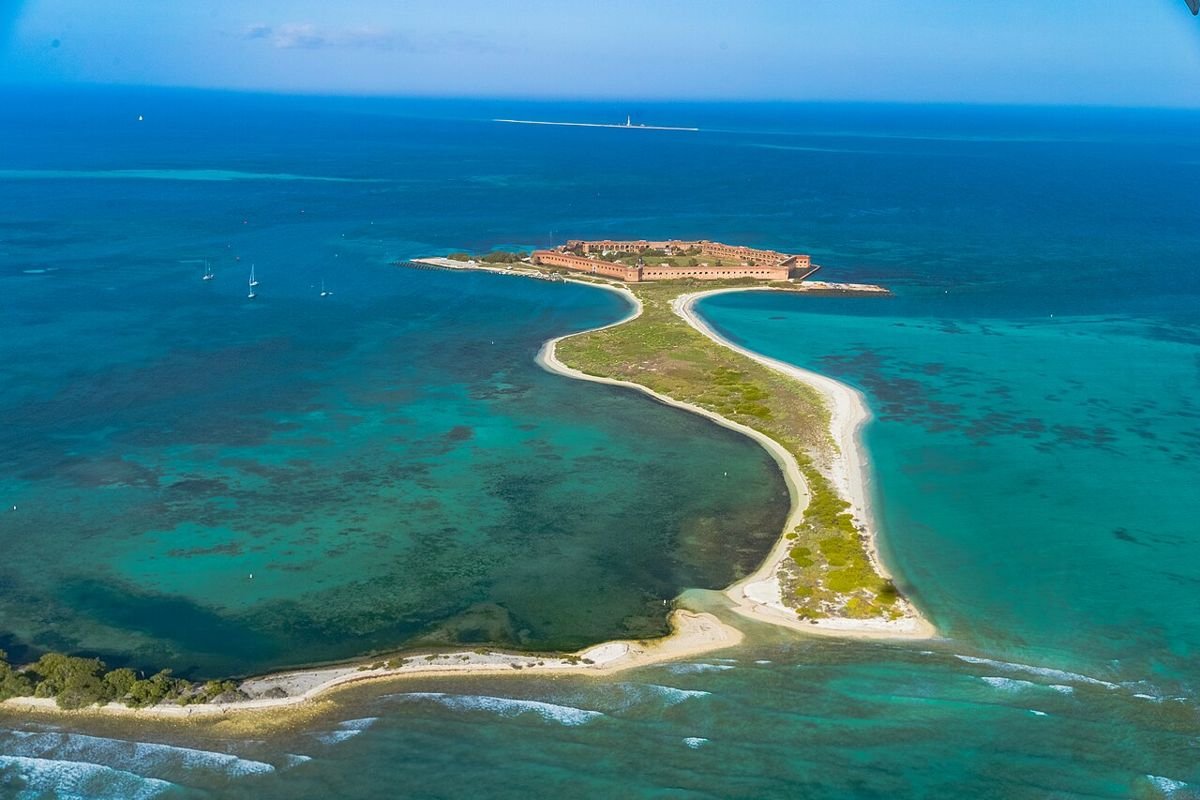
Dry Tortugas National Park sits about 70 mi west of Key West, in open water, with no roads or bridges connecting it to the Florida Keys. The National Park Service says the park can be reached only by boat or seaplane. That is part of the appeal: less than 1 percent of the park is dry ground, the water hides reefs and hundreds of shipwrecks, and Fort Jefferson on Garden Key is the largest masonry fort in the western hemisphere. It is also why a visit needs a plan made well ahead of time.
Most visitors arrive on Garden Key, where Fort Jefferson stands. Both the ferry and the seaplane go there, and neither stops anywhere else in the park. Because of travel time and the limited schedules, day visitors generally do not have time to reach Loggerhead Key.
Ferry or seaplane
The park lists two ways for most visitors to make the trip from Key West. The Yankee Freedom ferry is a high-speed catamaran that runs day trips and also carries campers. A seaplane charter authorized by the park offers morning, afternoon and full-day tours. Both land you on Garden Key, and both are the operators' own services: crossing times, time on the island, what the ticket includes and prices are set by them and can change, so confirm every detail directly when you book.
The trade-off is simple. The ferry is the way to go if you plan to camp, since camping plans, including bringing a kayak, are coordinated directly with the ferry. The seaplane is the faster way across the water. Either way, reserve early, because the schedules are limited and weather can affect crossings.
If you hold a valid national park pass, bring it. Visitors on a private boat must buy a digital entrance pass in advance on Recreation.gov for everyone age 16 and older, though boats only transiting the park without stopping do not need one.
What to see and do
Fort Jefferson: the largest masonry fort in the western hemisphere, filling most of Garden Key. Walk the walls and the courtyard, and join a fort tour if one is offered on your trip.
Snorkeling along the moat wall: the NPS highlights snorkeling in the clear water beside the fort, and with so little dry land, swimming is the best way to see the park.
Reefs, marine life and shipwrecks: the park is home to hundreds of wrecks and diving sites, best explored with a permitted charter or your own boat.
Birds and wildlife: birding is one of the park's highlights, so bring binoculars if you have them.
Make a full day of it
On a ferry day, the order is simple: tour the fort first while the morning is cool, then snorkel or swim, and leave the last hour for a walk around the beach. If you can, pick the trip with the most time on the island, which suits anyone who wants to snorkel properly or just slow down.
The park is a long way from any store. Visitors must bring their own food, water and every other supply, so pack lunch, plenty of water, sun protection, a hat and a towel. Boat, kayak and canoe rentals are not available in the park, and camping is booked through the ferry company.
Plan your visit
Decide between ferry and seaplane first, then book the date, because the schedules are limited and the weather can affect crossings. If you want to see beyond Garden Key, the most flexibility comes from a private boat or an authorized charter. Private boaters buy a digital entrance pass in advance on Recreation.gov for every visitor age 16 and older.
Fly into Key West (EYW) or drive the Overseas Highway from the mainland, and stay near the departure point the night before so an early morning start is easy. NPS also reminds visitors that the park is remote and conditions can be primitive, so bring a basic first-aid kit and be ready for rough seas. Confirm current operator details and schedules before you pay.
Thinking of staying overnight? Camping is on Garden Key, and campers usually travel on the ferry. The park suggests bringing a kayak or canoe if you camp, so you can reach nearby areas and snorkeling sites, and asks you to arrange that directly with the ferry. Remember that there are no rentals of any kind in the park, and that you will need to carry every bit of food and water for your whole stay.
What to pack
Pack as if you were going to a small island with no shops, because you are. Bring a full lunch, more water than you expect to drink, sunscreen, a hat, sunglasses and a towel. Add snorkel gear if you have your own, since there are no rentals in the park, and bring a light layer for the crossing.
Keep your valuables small and waterproof, wear shoes you can walk the fort in, and carry a printed or saved copy of your booking. If you are prone to seasickness, take the precaution before the ferry leaves the dock, not after.
Frequently asked questions
How do I get to Dry Tortugas?
Only by boat or seaplane; there is no car access. The ferry and the seaplane both run from Key West, and you can also go by private boat or an authorized charter.
Should I take the ferry or the seaplane to Dry Tortugas?
Both leave from Key West and land on Garden Key. The ferry is a high-speed catamaran that also serves campers; the seaplane is faster and offers morning, afternoon or full-day trips. Check crossing times and time on the island with each operator.
Can I buy food at the park?
No. Visitors must bring their own food, water and other supplies. Boat, kayak and canoe rentals are also not available in the park.
Can I see more than Fort Jefferson on a day trip?
Usually not. The ferry and seaplane serve Garden Key only, and day visitors generally do not have time to visit Loggerhead Key.
Sources
- Getting Around · National Park Service
- Plan Your Visit · National Park Service
- Dry Tortugas National Park · National Park Service
- Directions, Dry Tortugas National Park · National Park Service