Skyblog · Special places
Saguaro National Park in Winter: East or West District, Scenic Drives and Easy Trails
Mild days, two districts on either side of Tucson and a forest of giant cacti: how to plan a winter visit to Saguaro National Park.
Published November 26, 2026
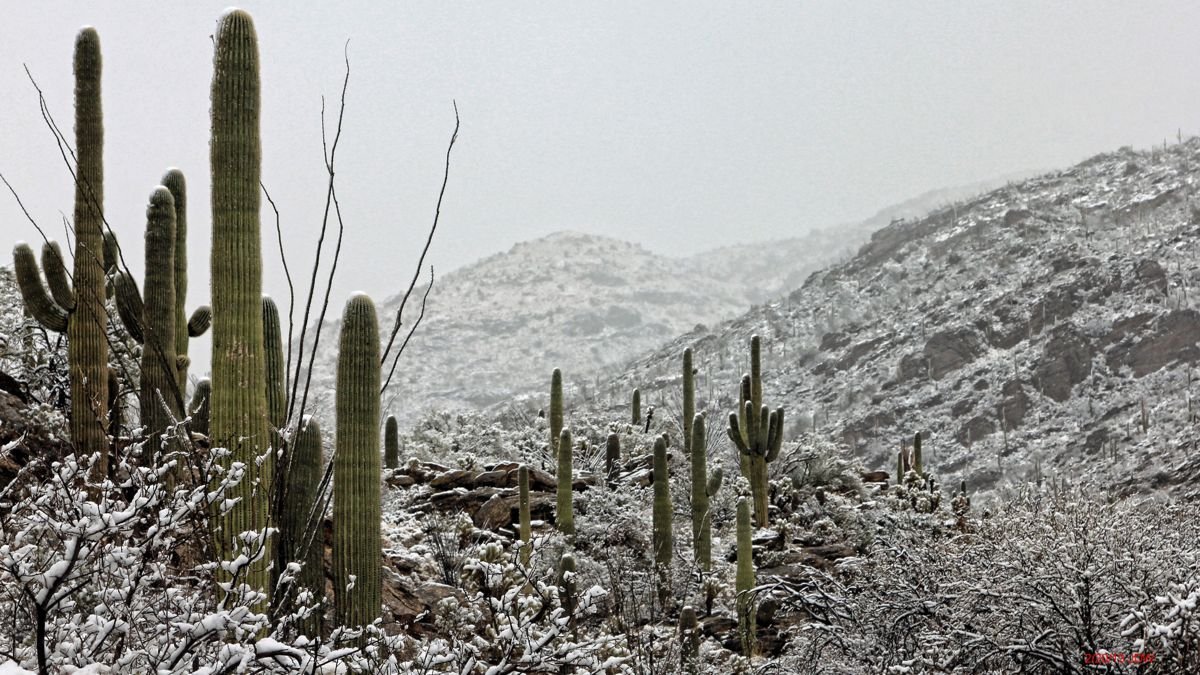
There is a reason the saguaro became the symbol of the American Southwest. Standing next to one, you see arms that took more than half a century to grow, a trunk pleated like an accordion and a height that can reach 50 feet. Saguaro National Park protects more than 2 million of them in two districts on either side of Tucson, and winter is the season when the desert is at its most comfortable.
Winter days in the Tucson area average about 65°F, with nights near 40°F, which is why November through March is the park's busiest stretch. Light winter rains arrive now and then, and on rare mornings snow even dusts the cactus forest before melting by afternoon. One date to know right now: the park's visitor information page lists Thanksgiving and Christmas Day as its exceptions to being open every day, so plan around them if you are visiting over the holidays.
Two districts, one park
The city of Tucson splits Saguaro National Park in two, and the districts feel quite different. The Rincon Mountain District (East) is the larger one, at 67,476 acres. It holds an older saguaro forest and climbs from desert scrub through oak woodland to pine forest on Mica Mountain, at 8,666 feet. It has 128 miles of hiking trails and the only backcountry campsites in the park.
The Tucson Mountain District (West) covers 25,391 acres at lower elevation, with a younger forest and a higher density of saguaros. Its 43 miles of trails top out at Wasson Peak, 4,687 feet high, and its five picnic areas make it an easy half-day outing.
Driving between the two districts takes 30 to 60 minutes depending on route and traffic, so most visitors give each one its own morning or afternoon. You pay the entrance fee only once: the pass covers both districts for 7 days. The park does not accept cash, and the park advises against searching for it by name in mapping apps. Instead, use the street addresses: 3693 S Old Spanish Trail for the East district and 2700 N Kinney Road for the West.
The scenic loop drives
Each district has a loop drive that works as a first look at the park. In the East, the Cactus Forest Loop Drive is 8 miles long, paved and open from 5 a.m. to 8:30 p.m. It winds through the older saguaro forest of the East district. If you are looking for the tallest saguaros, the park suggests the Loma Verde loop in this district.
In the West, the Bajada Loop Drive runs for about 5 miles on gravel along Golden Gate Road and Hohokam Road and is open to vehicles during daylight hours. Note that Golden Gate Road is permanently closed to vehicles between the Sendero Esperanza trailhead and Picture Rocks Road; that stretch is now a multi-use trail for hikers, cyclists and horseback riders.
Both visitor centers, Rincon Mountain in the East and Red Hills in the West, open daily from 9 a.m. to 5 p.m. between October 1 and May 31. They have restrooms, drinking water and public Wi-Fi, which is useful because cell coverage in the park is spotty.
Easy trails and a few longer hikes
You do not need to be a serious hiker to enjoy Saguaro. Three trails are accessible under the Americans with Disabilities Act: the Desert Ecology Trail and the Mica View Trail in the East, and the Desert Discovery Trail in the West. They are a good way to get close to the saguaros without committing to a long hike.
For more of a workout, the West district's trail network climbs to Wasson Peak, and the East district's trails lead toward the Rincon Mountains and the wilderness beyond. Backcountry camping in the East requires a permit reserved through Recreation.gov. In the higher parts of the Rincons, burned areas from two 2020 fires still call for caution: stay on the trail and watch for unstable ground and weakened trees.
Winter is the right season for longer hikes. Even so, carry plenty of water, start early so you finish before dark and pick up a map at the visitor center, since cell service can drop out.
Meet the saguaro
Saguaro (say it sah-WAH-roh) grows only in the Sonoran Desert, and mostly below about 4,500 feet, because hard freezes can kill it. It grows very slowly. In the park, a young saguaro adds only about 1 to 1.5 inches in its first eight years, usually sheltered under a nurse tree such as a palo verde, ironwood or mesquite. It flowers for the first time at around 35 years, and its arms usually start to appear between 60 and 75 years of age.
An adult is about 125 years old, may weigh 2 tons or more, and can live 150 to 175 years. The pleats expand like an accordion to store water after a heavy rain. The tallest saguaro ever recorded reached 78 feet before it fell in 1986. The creamy white flowers, the Arizona state flower, open in late spring, so a winter visit is about the silhouettes and the sunsets rather than the blooms.
Desert safety, even in winter
Admire the cacti without touching them. Spines are not poisonous, but punctures can become infected. Keep your hands and feet where you can see them, and if you hear a rattle, stop, find where it is coming from and move away while staying on the path. Dogs are not allowed on some trails, so check the park's pet rules before you bring one. Above all, check the park's current conditions page the morning you go: it posts road, trail and visitor center updates for both districts.
Frequently asked questions
Which district of Saguaro National Park is better?
It depends on your time and interests. The East (Rincon Mountain) district has the Cactus Forest Loop Drive, paved and 8 miles long, an older saguaro forest and higher mountains. The West (Tucson Mountain) district has a denser, younger forest, the gravel Bajada Loop Drive and the hike to Wasson Peak. With two days, see both.
How far apart are the two districts?
They sit on opposite sides of Tucson, and the drive between them takes 30 to 60 minutes depending on route and traffic. One entrance pass covers both for 7 days.
What is the weather like in winter?
Mild. The park reports winter days averaging about 65°F and nights near 40°F, with occasional light rain and, rarely, a dusting of snow that melts by afternoon.
Is Saguaro National Park open on Thanksgiving?
The park's visitor information page lists Thanksgiving and Christmas Day as the exceptions to its open-every-day schedule. Check the official current conditions page before a holiday visit.
Can I pay the entrance fee in cash?
No. The park is cashless; passes are sold by card at the visitor centers and the East district fee kiosk, or online in advance.
Sources
- Visitor Center Information, Saguaro National Park · National Park Service
- Current Conditions, Saguaro National Park · National Park Service
- Frequently Asked Questions, Saguaro National Park · National Park Service
- The Saguaro Cactus, Saguaro National Park · National Park Service
- Things to Do, Saguaro National Park · National Park Service
- Fees & Passes, Saguaro National Park · National Park Service